Explore our podcast archive
History Hub Podcasts
History Hub first started podcasting talks, lectures and interviews in 2011. Since then we have had over 1.7 million downloads across more than 20 different podcast series.
History Hub podcast series feature interviews, conference presentations and research papers on everything from the Easter Rising to the cult of Stalin, from early Christian Ireland through the Tudor and Stuart monarchs to contemporary European.
Many of our podcasts are posted directly to the site but for convenient access to our entire archive, users can subscribe (completely free of charge) to our various podcast series on Apple, Spotify, Soundcloud and via RSS feed. Our content is all entirely free for listeners and we regularly get more than 8,000 downloads per month.
At History Hub we enjoy collaborating with historians all across the world, local historical associations and academic conferences, on producing all manner of podcast material. Since 2011 we have been privileged to collaborate with the Tudor and Stuart Ireland conference in producing podcasts of their proceedings. Renowned historian Professor Michael Laffan honoured us by recording his final semester of lectures at UCD in 2010. His series The Irish Revolution became the most popular podcast in Ireland shortly after launch and has more than 1 million downloads to date.
The Irish Revolution
The Irish Revolution was a module taught by renowned Irish historian Professor Michael Laffan in UCD from the late 1970′s until his retirement in 2010. The lecture series covers a tumultuous period in Irish history. All 10 of the lectures were recorded and are available to download for free. The course has proven to be extremely popular (+1,000,000 downloads) and the series was, for a time, the most popular podcast in Ireland on iTunes.
History Hub's Podcast Series
The History Hub podcast series features recordings of interviews, talks and research papers by historians on a variety of topics, across all time periods, from early Christian Ireland to contemporary Europe. You'll find social history, military history, economic history, political history and everything in between. This series is where you'll find content not covered in our other series, which are more focussed on specific topics.
A history of xenophobia: from the goldmines to the rise of the far right today
This is a series of interviews between our editor Dr Irial Glynn and a number of leading experts on the history of xenophobia. The key question the series grapples with is: what causes xenophobia? Why are certain people hostile towards or afraid of immigrants or of people who come from different cultural backgrounds?
Kingdom, Empire and Plus Ultra: conversations on the history of Portugal and Spain, 1415-1898
This series consists of interviews with leading experts in the areas of Portuguese and Spanish history, from the beginning of the Portuguese discoveries in 1415 to the end of Spanish dominion in America in 1898. The interviews, conducted by Dr Edward Collins, cover a range of topics on the domestic and overseas histories of both nations.
Sport and Ireland: A History
Between March and June 2020, Prof. Paul Rouse of the School of History in University College Dublin recorded the weekly lecturers of his long running ‘Sport and Ireland: A History’ module. The recordings were undertaken as a series of interviews with Joe Molloy, the award-winning presenter of ‘Off the Ball’ on Newstalk FM and were broadcast live on radio.
History Hub’s Educational Resources
This is a podcast series for all history students – young and old. The series, which consists of interviews and lectures, features UCD historians sharing their expertise on topics such as: The Anglo-Irish Treaty; the development of fascism in interwar Europe; the Irish Women’s suffrage movement; and the Catholic Church in twentieth century Ireland.
UCD Centre for the History of Medicine in Ireland
Since it was setup in 2006 UCD Centre for the History of Medicine (CHOMI) has been committed to the use of new media to engage with academic communities and interested publics. History Hub is delighted to host this wonderful archive of podcasts and videos which are such an invaluable resource for members of the public and researchers alike.
Afterlives
The aim of the Afterlives project is to uncover the life stories and contributions of rebellious women in the wake of revolution and civil war in Ireland, Finland and Germany 1918-1980s. Supported by UKRI External Participatory and Collaborative Research Fund, London South Bank University and University College Dublin Decade of Centenaries Seed Funding.
Women’s Grassroots Activism Podcast Series
This podcast series tells stories of women’s grassroots activism across the island of Ireland and in England from 1918 to the present. These stories highlight the diverse ways that members of the Irish Countrywomen’s Association (ICA), the Soroptimists International Great Britain and Ireland (SIGBI), the National Federation of Women’s Institutes (NFWI) and the Federation of Women’s Institutes of Northern Ireland (WINI) contributed to enhancing the lives of women and girls locally, nationally and globally.
Recording the Revolution: The Harlan Strauss Tapes
In 1972, Harlan J Strauss, a young American PhD student, came to Ireland and interviewed veterans of the Irish independence struggle – men and women, at this point in their 70s and 80s, who shared their experiences, sometimes for the first time. This podcast explores the things those people said and how those who lived through the Irish revolution saw it fifty years after the fact. Dr Conor Mulvagh and Harlan Strauss delve into these interviews and get an insight into the mind of an Irish revolutionary.
Women’s Grassroots Activism Podcast Series
This podcast series tells stories of women’s grassroots activism across the island of Ireland and in England from 1918 to the present. These stories highlight the diverse ways that members of the Irish Countrywomen’s Association (ICA), the Soroptimists International Great Britain and Ireland (SIGBI), the National Federation of Women’s Institutes (NFWI) and the Federation of Women’s Institutes of Northern Ireland (WINI) contributed to enhancing the lives of women and girls locally, nationally and globally.
Conference podcasts
History Hub regularly collaborates with associations in the production of podcasts from their conferences and events. This helps the associations to reach a wider audience, both in Ireland and worldwide, and it also helps the individual speakers to showcase their research.
Tudor and Stuart Ireland Interdisciplinary Conference
The annual Tudor & Stuart Ireland Interdisciplinary Conference welcomes established academics, early stage and independent researchers, as well as postgraduates from Ireland and beyond to present their research in a genuinely collegial environment. Since 2011, over two hundred speakers from a range of disciplines have presented papers at Tudor and Stuart Ireland Conferences.
Commemorating Partition and Civil Wars in Ireland, 2020-2023
Commemorating Partition and Civil Wars in Ireland, 2020-2023 is a project run by Dr Marie Coleman and Dr Dominic Bryan at Queen’s University Belfast. The AHRC-funded project, examined approaches to the 2020-2023 period of the ‘decade of centenaries’, on both sides of the Border. Project events, were recorded for podcasting in association with History Hub.
Holocaust Education Ireland
Holocaust Education Ireland is the independent and non-profit organisation which aims to educate and inform about the Holocaust and its consequences. History Hub has recorded several Holocaust Education Ireland events, including a UCD lecture by Dr Anna Hájková on sexuality in the Holocaust, and a TCD lecture by Roger Moorhouse on The Łados Group which are available to podcast.
Partitions and Borders
Partitions and borders: a comparative and interdisciplinary conference took place in UCD School of History in May 2018. Jointly organised by University College Dublin and Jawaharlal Nehru University, New Delhi, this two-day international conference brought together scholars working on aspects of partition and border studies from multiple disciplines.
The Abbey of St Thomas the Martyr: A Dublin City Council Medieval Symposium
The Abbey of St. Thomas the Martyr was founded in the 12th century and played a pivotal role in the religious and political affairs of Dublin city until its dissolution in 1539. A weekend of events celebrating the abbey took place in October 2017. As part of the celebrations, a symposium on the history of the abbey took place in St Catherine’s Church, Thomas Street.
Universities in Revolution and State Formation conference
The Universities in Revolution and State Formation conference took place in UCD Newman House in June 2015. The conference offered a national, European and global perspective on the role and experience of universities in times of revolution and uprising. The conference proceedings are available to podcast.
Women’s History Association Annual Conference 2020 / 2021
The annual conference of the Women’s History Association of Ireland is one of the highlights of the history conference calendar. The conference was titled “Besieged bodies: Gendered violence, sexualities and motherhood”. It showcased innovative new research by fifty scholars from Ireland and abroad in fields of women’s history and gender history.
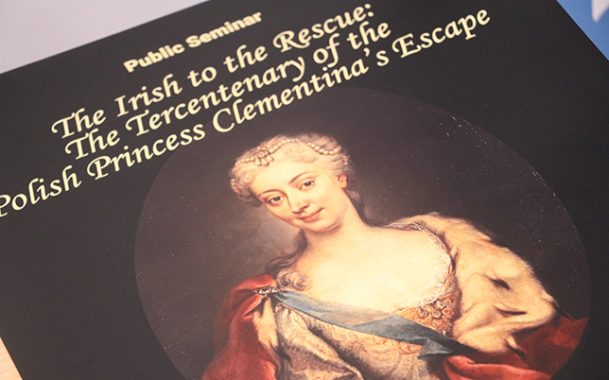
The Tercentenary of the Polish Princess Clementina’s Escape
The seminar was organised on the occasion of the tercentenary of the rescue of the Polish Princess Maria Clementina Sobieska from captivity in Innsbruck in April 1719. The story of the rescue itself was retold and complemented by perspectives from several historians. The podcasts from the event are now available.
LGBT Activism in Ireland, 1973-2023: Looking Back, Going Forward
Podcasts recorded at LGBT Activism in Ireland, 1973-2023: Looking Back, Going Forward. The project comprised of two workshops which were organised by Mary McAuliffe (Director, UCD Gender Studies), in partnership with the National LGBT Federation (NXF), and funded by Research Ireland New Foundations award. Panels included: History of LGBT Activism in Ireland; Documenting the Movement: Queer Histories, Public and Personal Archives, Collective Memory; and, Writing our Histories.
Latest Podcasts

Tudor and Stuart Ireland Conference Podcasts
Since 2011, researchers from a range of disciplines including History, Irish, English, Archaeology and Art History, have presented papers at Tudor and Stuart Ireland conferences. History Hub, in association with Real Smart Media, has produced more than 320 podcasts from these conferences.

Open and Lifelong Learning History Courses
UCD offers a variety of study options and entry pathways, ranging from full-time degrees to short-term courses for pure interest. Lifelong Learning offers all adult learners the opportunity to explore a subject of their choice without the pressure of an examination. Open Learning is a flexible way of studying history part-time at UCD. Explore your UCD History options for the coming year.

LGBT Activism in Ireland, 1973-2023
LGBT Activism in Ireland, 1973-2023: Looking Back, Going Forward is a UCD project which comprised of two workshops which were organised by Dr Mary McAuliffe (Director, UCD Gender Studies), in partnership with the National LGBT Federation (NXF), and funded by a Research Ireland New Foundations award.
The workshops – History of LGBT Activism in Ireland and Where We’re Going – Backlash, Solidarity, and Mobilising took place in UCD Humanities Institute in April 2025. Podcasts from the workshops are now available on History Hub.

Surviving Liberation: Jewish Camp Survivors 1945-1948
Holocaust Education Ireland’s Holocaust Memorial Lecture for 2025 was given by Prof. Anthony McElligott from University of Limerick. A podcast of his lecture – “Surviving Liberation: Jewish Camp Survivors 1945-1948” – is now available on History Hub.

Recording the Revolution: The Harlan Strauss Tapes
In 1972, Harlan J Strauss, a young American PhD student, came to Ireland and interviewed veterans of the Irish independence struggle – men and women, at this point in their 70s and 80s, who shared their experiences, sometimes for the first time.
Harlan’s tapes offer often unparalleled insights into both the experiences and perceptions of revolutionaries reflecting back on their youth. Now, 50 years later, Conor and Harlan have teamed up to delve into these interviews and get an insight into the mind of an Irish revolutionary.

Women’s Grassroots Activism Podcast Series
This podcast series tells stories of women’s grassroots activism across the island of Ireland and in England from 1918 to the present. These stories highlight the diverse ways that members of the Irish Countrywomen’s Association (ICA), the Soroptimists International Great Britain and Ireland (SIGBI), the National Federation of Women’s Institutes (NFWI) and the Federation of Women’s Institutes of Northern Ireland (WINI) contributed to enhancing the lives of women and girls locally, nationally and globally. Funded by United Kingdom Research Innovation (UKRI) Arts and Humanities Research Council (AHRC)

Military Welfare History Network – Conference Podcasts
The Military Welfare History Network provides a networking and dissemination platform for scholars who are research active in military welfare history.
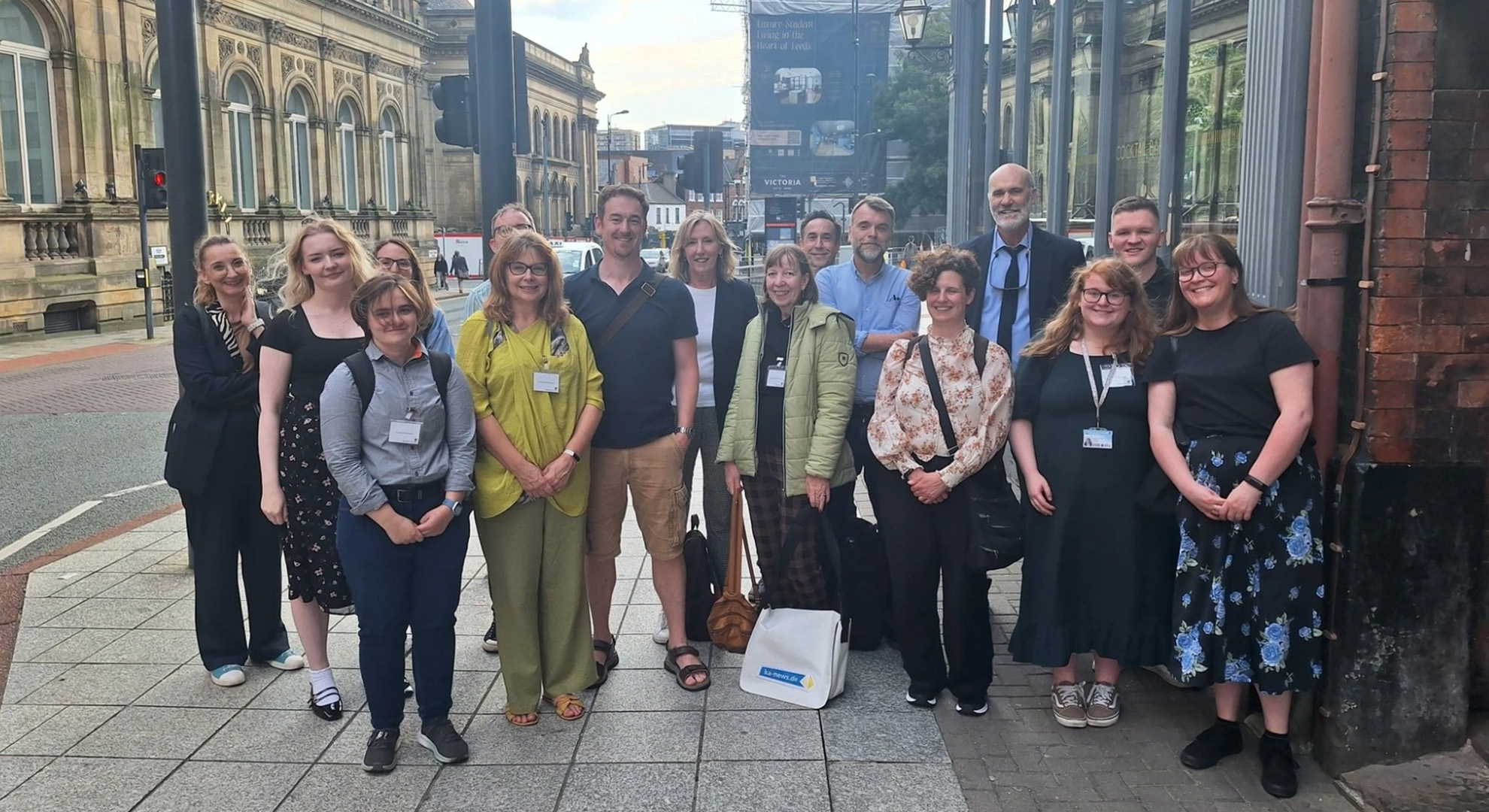
In 2024 the Military Welfare History Network (MWHN) hosted its third international conference at the University of Leeds on 20 and 21 June. Led by Prof Jessica Meyer, the organising team hosted a two-day event at Leeds on the theme of ‘Economies of Military Welfare: conversations between past and present’. The conference was generously supported by the University of Leeds and the Economic History Society. Two papers recorded at the conference are now available to podcast.

A History of Xenophobia
History Hub presents a series of interviews between our editor Dr Irial Glynn and a number of leading experts on the history of xenophobia. The key question the series grapples with is: what causes xenophobia? Why are certain people hostile towards or afraid of immigrants or of people who come from different cultural backgrounds? Does it stem from anger related to a real or perceived decline in living standards? Does it reflect discomfort with the pace of social change or increasing societal diversity? Or is it connected to the arrival of charismatic and innovative politicians and well-organised far right parties?